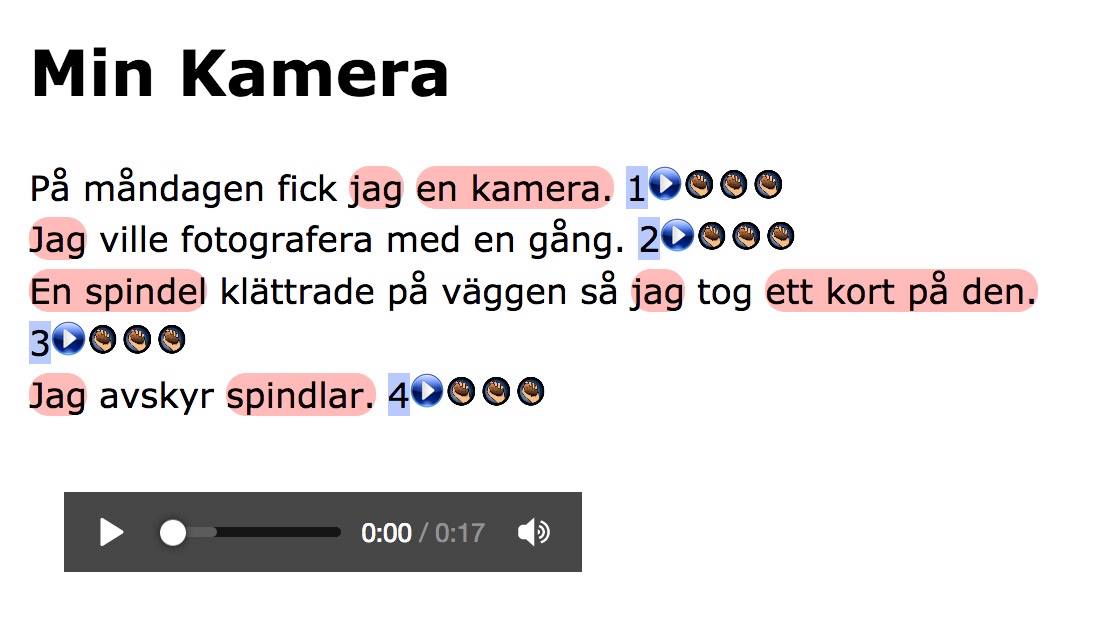
Do you understand Swedish?
Try this link, open the book and play the audio. Pretend someone is reading it to you and pointing. Highlight the red groups of words (red brick). Can you identify what they are?
Do you understand Swedish?
Try this link, open the book and play the audio. Pretend someone is reading it to you and pointing. Highlight the red groups of words (red brick). Can you identify what they are?
As an example, the software in the small window is based on the concepts of Functional Grammar. OK, but how can understanding this Functional Grammar help with my everyday language teaching? What relevance does it have?
Consider a small child, who has often been read to and shared open books with its parents and carers. When he or she eventually starts primary school, the function of books and the purpose of the symbols on the pages will be very familiar. The child may even be able to recognize some words, word-groups, or simple phrases connected to the pictures of favorite topics or stories, and be keen to learn more. Above everything, the child will be well equipped to grasp newly learnt letter names, phonetics, and punctuation at school to build words and sentences.Now consider the difficulties possibly faced by a child from a home with few or no books, older learners who have fallen behind, learners from contrasting cultural backgrounds, or just any person starting to learn a new language for the very first time. To these learners, learning abstract grammar and pronunciation rules may appear strange and insurmountable. However, it is possible to teach any learner to read (or say) an existing short text or language extract in a meaningful context within, say, an hour. (e.g. Assuming Swedish is new to you, try the Swedish learning e-book in the little window link.) Once this ability is anchored, we can then progress to look at details of structure using functional techniques later. Although perhaps for some 'at odds' with traditional schooling, this 'top-down' approach mirrors natural first language acquisition more closely.
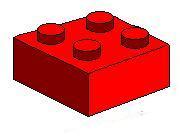
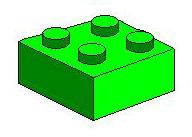
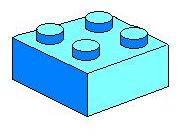
| The cat | sat | on the mat. |
|
|
|
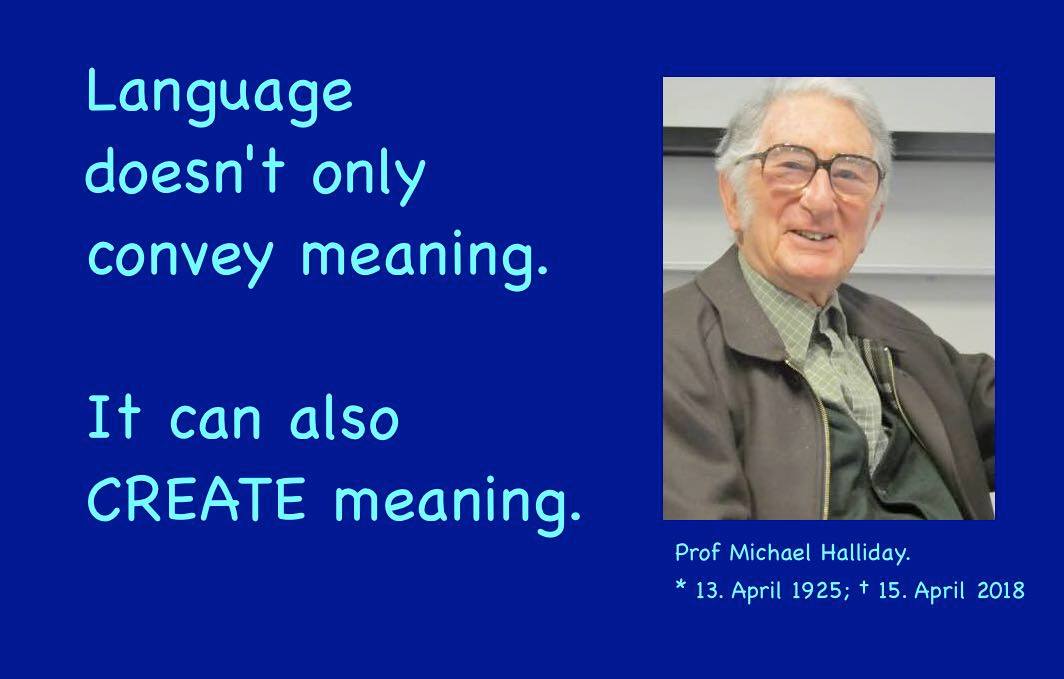
Professor M.A.K. Halliday devised the theory of Systemic Functional Linguistics and Functional Grammar, which has a wide following in both academia and education.
Functional grammar can support traditional grammar and phonetics to help us think about the very nature of human language, its potential for making meaning, and its successful acquisition and use by learners. This broader analysis may also highlight important aspects of the human learning process which we might otherwise take for granted. The form of functional grammar (SFG) which has influenced this website is a part of the Systemic Functional Linguistics (SFL) theory of language and meaning. SFL theory links language forms directly with the meanings they present, and it offers ways of talking about language that can help learners to directly relate to language and content (Schleppengrell in Coffin et al, 2010). SFL is a fairly complex and widely embracing academic linguistic theory, but we will be greatly simplifying its concepts for the purposes of this website. In spite of this, it really has a great deal to offer for effective teaching of language and literacy.
Brain’s Shortcut: When reading fluently, our brains predict upcoming words based on context, shape, and prior knowledge, filling in gaps without needing every letter. This is why “teh” for “the” or “wrok” for “work” often go unnoticed by good readers.
Advantage in Natural Language: This skill shines in understanding texts, like the examples of “a big book” or “the art of motorcycle maintenance”, where the whole functional group carries meaning, not just isolated words.
Test yourself!" - "fi yuo cna raed tihs" you are an excellent reader!
(c) 2025 Alan Hess - Click here for Page 3 - How to get going using FG