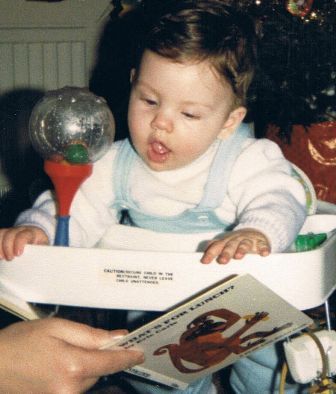
Take a few moments to think about how a small child learns its first language. Do we teach our children letter names, phonetics, and formal grammatical rules first? Of course not, they usually experience fully functional and context-specific language right from the start. Pre-school children who are shown books and read to regularly can experience the functionality of suitable written texts even though they cannot read them in detail alone at first. In fact, such children will typically have around 1000 hours experience of valuable contextual interaction with books before they start primary education. Learners who may have missed this contextual preparation can often face substantial difficulties in a school or class environment, especially when having to compete with more confident peers.
So why do we often concentrate so much on abstract vocabulary lists, phonetic rules, 'a' for apple, 'b' for ball, or other out-of-context phrases and formal grammatical rules when teaching literacy or introducing a second language for the first time? Or, what should we do if some learners are slow to make progress in reading, writing, and language activities in traditional mainstream classrooms? It could be that we might sometimes underestimate their abilities on possibly false assumptions.
